
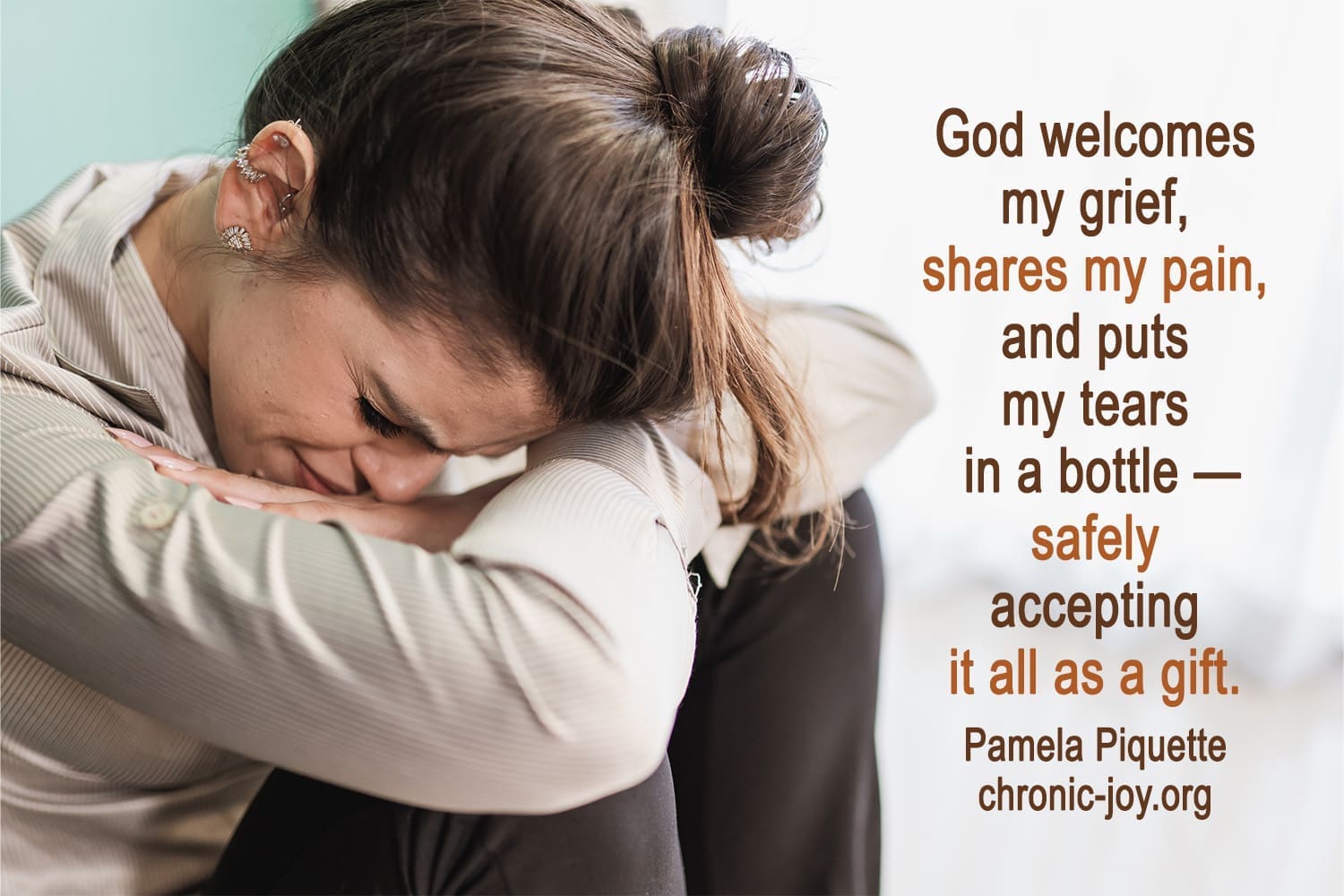
God welcomes my grief, shares my pain, and puts my tears in a bottle — safely accepting it all as a gift. (Pamela Piquette)
FACING UNWELCOME NEWS
As I left physical therapy in April of 2016, I noticed a missed call from my mom. Because I was in rough shape from flaring pain and relentless migraines, I decided I would return her call after I got home and had a quick shower.
When I called her, I discovered that my dad had been taken by ambulance to the big hospital about an hour from where they lived. By the time I called, they had run tests and discovered a brain tumor.
Over the next few hours, I booked a morning flight and packed my luggage. My PT advised me to wear my Aspen collar (a neck brace) and a special compression vest. I began my journey without any thought to my raging migraine and physical pain, stuffing down any feelings about it all.
After my dad’s brain surgery (and during five months of cancer treatment), I walked with my family through Dad’s decline and death. The day after he died, my husband and I arrived at my parents’ house to meet with my mom, brother, and sister to plan his funeral.
GRIEF ERUPTED LIKE A VOLCANO
When I arrived, my dad’s little side table (which had been beside his recliner during the months of cancer treatment and had held all his snacks, drinks, and medicine) was sitting in the garage. When I saw it, I completely fell apart. Grief overwhelmed me, erupting like magma from a volcano—hot, messy, and unrelenting.
Since I insisted that my husband put the table in my trunk, I walked into the house alone. Instead of being comforted, I was immediately shushed by everyone in the house. My grief was unwelcome because my feelings were unimportant and because my brother was on a video call on his laptop in the living room. He did not pick up his computer and move, nor did my mom or sister reach out to me. Instead, they gave me a look making it clear that I should either leave or stuff down my feelings. My grief did not belong. Perhaps it was I who didn’t belong.
SUBTLE LOSSES AND UNWELCOME GRIEF
While this painful experience was a bit extreme, it opened my eyes to the subtle ways that my grief over more minor losses has been minimized, dismissed, ignored, or avoided by others (and by me). Grief is not welcome in our culture, and that message was made especially clear on the day after Dad passed away.
CRISIS CARE
Some years before, when I was hospitalized with c-diff (and through the following months when it didn’t go away), there was support from my family and friends for the necessary physical things that I couldn’t do. However, as soon as I was cured (although not yet well), the care of others dissipated—even though 3½ months of being extremely ill and losing 25 pounds had left me struggling to move through each day. The crisis was over, and everyone fled.
My dear friend Cindee was the only one who called every day to check in, inviting me to wrestle with the physical pain, my thoughts, my feelings, things I was missing, all that I could not do. Little did I know that she was helping me grieve!
Grief, while personal, is often also a shared experience with others, something I had encountered with Cindee. As we share stories of what has been, we also wrestle with how we will move forward. Perhaps most importantly, we simply sit in the ash together, being present for one another and suffering together.
CONSEQUENCES OF UNWELCOME GRIEF
I slowly regained my strength, but this was the beginning of significant long-term chronic illnesses that forever changed my life. Loss of so many aspects of my life and the loss of connection with others left me depressed and anxious much of the time. There was always some facet of a treatment plan that required me to do something; there was a body and mind that kept me from living as I once had; there were constant, unrelenting migraines. All this intensified after my dad’s funeral.
My life became small, and my activity was limited, leaving me feeling isolated, lonely, and forgotten. Unwelcome grief took its toll on me, which contributed to chronic conditions, anxiety, and depression. Suddenly, there were foods I could no longer eat, medicines I had to take, lost connections with others, and unwanted changes in my behavior.
I became defensive and prickly with my husband, and the volcanic magma bubbled up more often than I care to admit. Sadly, the changes in me affected my husband, causing him to choose his words more carefully, guard his reactions, and second-guess his thoughts and feelings.
SITTING WITH GOD THROUGH GRIEF
As a child, I learned that grief was not welcome by my parents. I was often rejected, sent to my room (if I wanted to talk about how I felt, was sad, or just needed to express my feelings), and rarely consoled. Sadness and grief were dismissed because any big feelings or emotions were unwelcome.
While I may still feel alone when sadness enters, and even though it seems others don’t want to be a part of my emotions, I am learning to sit with God and welcome my feelings, my tears, my memories, my pain. I am even ultimately learning to welcome my grief.
You have kept count of my tossings; put my tears in your bottle. (Psalm 56:8)
God welcomes my grief, shares my pain, and puts my tears in a bottle—safely accepting it all as a gift. Perhaps I need to make space for grief in my daily life and take time to grieve each day’s small losses…
PRAYER
Lord, Your word tells us that you will have trouble in this world. Help us lament and lean into Your comfort as we experience trouble, loss, sorrow, and pain. As we wrestle with what was, may we discover hope as we look forward to what’s next. Amen.
QUESTIONS FOR REFLECTION
- When has your grief been unwelcome (even for you)?
- What would it take to bring your sadness and grief to God? What words popped into your mind? Could you choose to sit with Him today?
- Magma and a volcano are a metaphor for grief. How would you describe yours?


Pamela Piquette
Executive Director and Co-Founder of Chronic Joy®
Pamela, a leader and a visionary following God's call to inspire those affected by chronic illness, mental illness, and chronic pain, believes that every precious life impacted by illness is both vital and purposed.
Pamela is a wife of more than 35 years, the mom of three married children, and a grandma of six. She is diagnosed with chronic migraines and other chronic conditions. She enjoys baking sourdough bread and chocolate chip cookies, drinking hot tea, being outdoors, and reading (almost always more than one book at a time).

Coping with Grief
14 Ways to Make a Difficult Day Brighter • Grief takes time, but God is with us. He loves us beyond imagining, and He is gathering every heartbroken tear. Gratitude can become a beautiful thread in our grief journey. It doesn’t ease the pain or injustice of grief, but it does remind us that there is still good in God’s world, that God is still good, and that no matter how we feel, we are not alone.


Thank you for sharing your story of loss, I related to your losses as your world has become small. I have chronic pain, loss of much weight & physical strength. I rely on God for His strength to get up, move around, keep warm, food to eat, waiting, rest, not going out, and pray. I also rely on His joy to keep away depression and fear, tho some days I have them. He is faithful in His supply. I am alone most of the time, tho He has supplied me with 5 phone or on-line prayer groups.
I’m always glad when I click through an email and read such great articles from chronic-joy. Thank you for sharing your personal experience with grief. I’m so sorry for your loss and that you didn’t have the emotional support during your loss. I am appreciative that you have given me a good example of how to bless another through my adversity though. By getting vulnerable and sharing your experience you have helped me today not feel so alone in my relentless pain and suffering. I think grieving my past lives as I continue to evolve through with chronic pain and conditions is an ongoing challenge. Sometimes I miss my old body and getting to get up and go for a walk or shopping or whatever and then I realize that I took so much for granted and that I shouldn’t keep doing that. Although my life is very different now I also still have much to be thankful for. This article is one!