
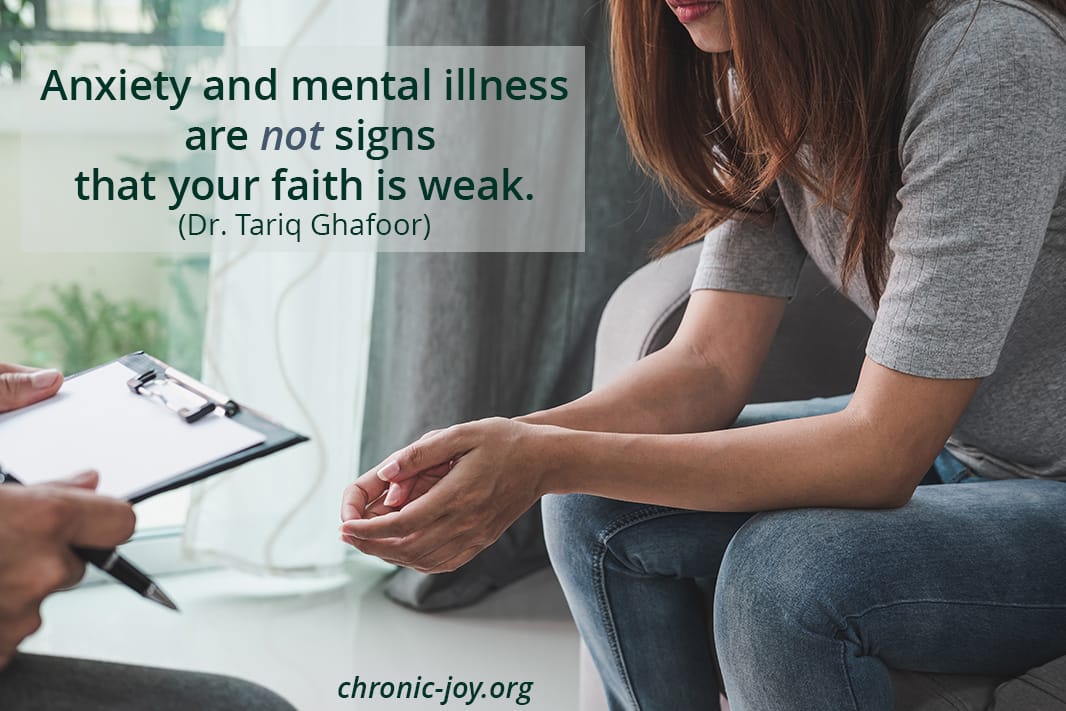
Anxiety and mental illness are not signs that your faith is weak. (Dr. Tariq Ghafoor)
WHEN THE PRESCRIPTION RUNS OUT
WHY WON'T THIS GO AWAY?
She sat across from me in my office, her hands folded in her lap, the way people hold themselves together when they fear coming apart. She had tried three different treatments, had done everything right—and still, the anxiety came for her each morning like a tide she could not stop.
"I don't understand," she said, and I recognized the question beneath her words. It was not really about brain chemistry or neurotransmitters. It was the older, harder question: Why won't this go away?
I have sat with that question many times, both as a psychiatrist and as a person of faith. I have watched people carry mental illness the way you carry a stone you cannot put down—and I have learned (sometimes slowly, sometimes painfully) that there is a place where medicine reaches its limits and something else must take over.
Let me be clear about what I mean. I am not suggesting that faith is a substitute for treatment or that spiritual practice replaces the kind of care that helps people survive. I have seen faith misused that way, handed to suffering people like a bandage over a wound that needed stitches. That is not what I am describing.
What I have witnessed is different. I have watched people who were doing everything clinically correct still find themselves in a gap, a space between what medicine can address and the ache that persists beneath the surface… the ache that asks, “Does my suffering mean anything? Is anyone with me in this? Will I ever be more than this diagnosis?”
Those are not medical questions. They are spiritual ones.
FAITH HOLDS WHAT MEDICINE CANNOT
There is a kind of suffering that resists being solved and asks only to be witnessed. Many faith traditions speak directly to this. They do not promise the removal of hardship. They promise presence within it. That distinction has changed how I understand my work.
When someone tells me their anxiety has not lifted despite everything we have tried together, I do not hear failure. I hear an invitation to ask a different question: not only “What else can we do?” but also “What does your faith say about the weight you are carrying right now?”
I grew up watching my parents pray with a stubborn tenderness that made no sense unless God was real. They were immigrants who carried uncertainty like people carry heirlooms, carefully and with both hands. When my mother was ill, she did not choose between her doctors and her faith. She brought both into the same room and let them speak to different parts of her.
I carry that image with me into my work now. For many of my patients, the question of spiritual meaning opens a door they had not considered. They have been so focused on getting better that they have forgotten to ask what it might mean to be held, even while still unwell.
There is a difference between healing and being held. Medicine works toward healing, while faith offers being held in the meantime.
MENTAL ILLNESS IS NOT A SIGN OF WEAK FAITH
Anxiety and mental illness are not signs that your faith is weak. I want to say this plainly because I have seen the damage caused by the opposite message. The brain is an organ. It can suffer as any organ does. Bringing that suffering to God is not a confession of spiritual failure. It is an act of the deepest trust.
Yet I have also seen something shift in people who brought their illness into the light of their faith rather than keeping the two separate—not that the symptoms disappeared, but that the meaning of the symptoms changed. The suffering did not feel so solitary. The silence around the hard days felt less like abandonment and more like presence.
I invite you to consider where faith and your experience of mental illness or anxiety currently meet… or where you have kept them apart. Perhaps there is a part of your suffering you have not yet brought to God, not because you don't believe, but because the words felt too tangled or the pain felt too ordinary or too large.
Now I’m sure of this: the sufferings we endure now are not even worth comparing to the glory that is coming and will be revealed in us … For we know that all creation groans in unison with birthing pains up until now. And there is more; it’s not just creation—all of us are groaning together too. Though we have already tasted the first fruits of the Spirit, we are longing for the total redemption of our bodies that comes when our adoption as children of God is complete—for we have been saved in this hope and for this future. (Romans 8:18, 22-24)
PRAYER
Lord God, I come to You at the edge where medicine ends, and the ache remains. I have tried to do everything right, yet anxiety still rises within me. When medical answers fall short, and I feel stuck in the gap between treatment and peace, please meet me there.
Remind me that I am more than a diagnosis and that my suffering is not a sign of failure but an invitation to lean into You. Take the weight I was never meant to carry alone and grant me the peace only You can give. I am so grateful for Your presence, Lord. In Jesus’ name, amen.
QUESTIONS FOR REFLECTION
- Where in your experience with mental illness or anxiety have you sensed God's presence, and where has that presence felt distant or silent?
- Is there a gap between your clinical care and your spiritual life? What might it look like to bring those two parts of your experience into the same room?
- What would it mean to you to be held by God in your current season, even if healing has not yet come?


Tariq Ghafoor
Tariq is a child and addiction psychiatrist from Arizona, and currently serves as medical director at Aurora Behavioral Health. He is the co-founder of addictionrehab.com, a resource dedicated to helping individuals and families navigate the path to recovery. He writes at the intersection of faith, medicine, and the human experience of suffering.

Prayers for Anxiety
Anxiety can make it difficult to find the words to pray. Use these short prayers to guide your thoughts until you are able to find your own. May you find encouragement, comfort , and peace.


Recent Comments